
Single-Sitting RCT vs Multiple-Visit Root Canal Treatment: What Is the Difference?
When your dentist says you need a root canal, two questions usually follow: How many visits will it take? and Can it be done in one go? You may have heard friends talk about finishing their root canal in a single afternoon, while others returned two or three times. So which is better, and why do the numbers differ?
The honest answer is that both approaches can work very well. The right one depends on your tooth, the level of infection and your circumstances. At The Dental Clinic Newtown, we offer both, and our root canal dentist in Newtown team recommends the option that gives your tooth the best chance of healing. This guide explains single sitting RCT vs multiple sitting RCT, so you know exactly what to expect.
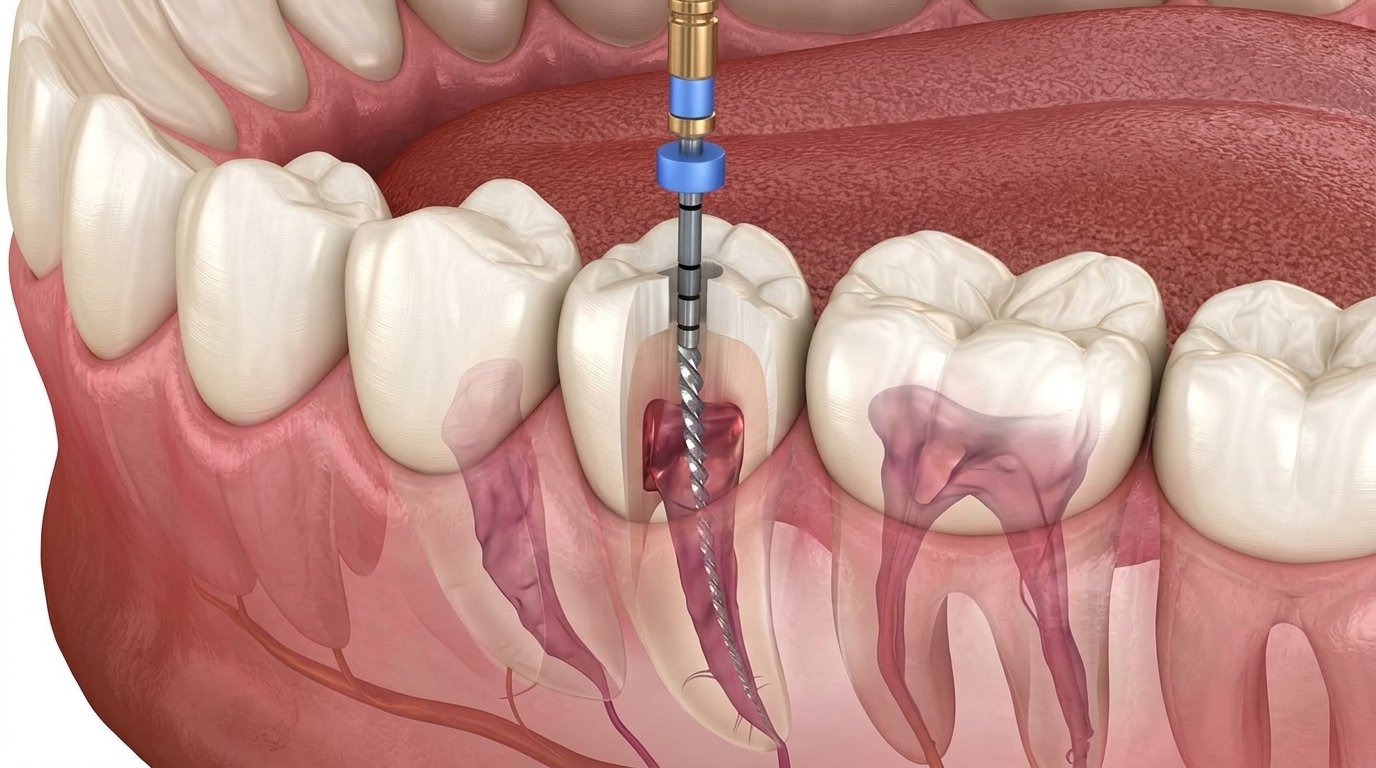
A Quick Reminder: What Happens in a Root Canal?
A root canal (RCT) treats an infected or inflamed tooth by removing the damaged pulp, cleaning and disinfecting the root canals, and sealing them to prevent reinfection. The tooth is then restored with a filling or crown. Whether this takes one appointment or several, the goals are the same: remove infection, seal the canals and save your natural tooth.
The difference lies in when the cleaning, disinfection and sealing are completed.
What Is Single-Sitting RCT?
Single sitting RCT in Newtown means the entire canal treatment is completed in one appointment. The tooth is numbed, the pulp removed, the canals cleaned, shaped, disinfected and filled, all in the same visit. A single visit root canal treatment is often followed by a temporary or permanent filling, with a crown planned within a few days to two weeks.
Single sitting RCT is made possible by modern tools such as rotary endodontic instruments, apex locators and digital X-rays, which make cleaning faster, more precise and more comfortable than older hand-file methods.
What Is Multiple-Visit Root Canal Treatment?
Multiple sitting RCT spreads the treatment across two or more appointments. At the first visit, the pain source is treated, the canals are cleaned, and a medicated dressing is placed inside the tooth with a temporary filling. At the next visit, usually a few days to a week later, the canals are re-checked, cleaned again if needed and permanently sealed.
The gap between visits gives the medicine time to disinfect the canals and allows inflammation to settle, which is especially useful in certain infections.
Single-Sitting vs Multiple-Sitting RCT: Side-by-Side
| Factor | Single-Sitting RCT | Multiple-Visit RCT |
|---|---|---|
| Number of visits | One appointment for canal treatment | Two or more appointments |
| Time at the chair | Longer single session | Shorter sessions, spread out |
| Best for | Straightforward cases, no swelling | Severe infection, abscess or complex canals |
| Between-visit care | None needed | Temporary filling must be protected |
| Risk of temporary filling leaking | Minimal | Small, if the filling is damaged |
| Convenience | High, ideal for busy patients and travellers | Needs planning around return visits |
| Disinfection method | Done thoroughly within one visit | Extra medicated dressing between visits |
| Comfort | Comfortable under local anaesthesia | Comfortable; shorter sessions may suit anxious patients |
Neither is automatically “better”. They are two paths to the same goal, and the best one is the one that suits your particular tooth.
Advantages of Single-Sitting RCT
- Savestime: One appointment means fewer trips, less time off work and fewer
- Idealfor travellers and NRIs: Complete treatment during a short stay in
- No temporary filling risk: The canals are sealed immediately, so there is less chance of bacteria entering between visits.
- Lessanxiety: One numbing session and one procedure for patients who dread repeat
- Fasterrelief and a quicker path to the crown: You can move on to final restoration
Advantages of Multiple-Visit RCT
- Betterfor heavy infection: Medicated dressing between visits helps disinfect stubborn
- Allowsswelling and inflammation to settle: Especially useful when there is an abscess or
- Suitscomplex anatomy: Curved, narrow or extra canals in molars may need more time and
- Shortersessions: Easier for patients who cannot sit for a long
- Usefulfor retreatment: Old filling material often needs careful, staged
When Is Single-Sitting RCT Suitable?
Single sitting RCT is usually a good choice when:
- Thepulp is inflamed but there is no facial swelling or draining abscess
- Thecanals are straightforward and easy to access, common in root canal for front teeth
- Thetooth can be cleaned and dried properly in one session
- Thepatient can comfortably keep their mouth open for the required time
- Thepatient is travelling or has limited time for repeat visits
When Is Multiple-Visit RCT Recommended?
Your dentist may advise two or more visits when:
- Thereis severe infection, a large abscess, swelling or a draining sinus
- The canals are very curved, narrow, calcified or unusually numerous, as in some root canal for molar teeth
- Thecanals keep bleeding or weeping and cannot be dried for sealing
- Thetooth is being treated for a failed root canal or repeat root canal treatment
- Thepatient cannot tolerate a long session, or the tooth needs more healing time first
Where we recommend more than one visit, we always explain why. It is not a way to prolong treatment. It is a clinical decision made for your tooth’s long-term health.
Does Single-Sitting Mean Better or Worse Results?
Patients understandably worry that finishing in one visit means cutting corners. In suitable cases, that is not true. When the canals are properly cleaned, disinfected and sealed, and the tooth is well restored afterwards, outcomes are generally comparable between single-visit and multiple-visit treatment. What matters most is case selection, the quality of cleaning and sealing, and a well-fitted crown or filling.
Likewise, taking several visits is not a sign of poor treatment. It often reflects a more complex tooth.
Is Root Canal Treatment Painful, Whether One Visit or Several?
Is root canal treatment painful? Not in the way most people fear. The pain people associate with root canals comes from the infection, not the procedure. Both single-sitting and multiple-visit treatments are done under local anaesthesia, and our approach to painless root canal treatment in Newtown is the same either way: effective numbness, gentle rotary instruments and a calm, patient-first environment.
Mild tenderness for 2 to 4 days afterwards is normal with either approach and is usually controlled with pain relief advised by your dentist.
How Long Does Root Canal Treatment Take?
How long does root canal treatment take depends on the tooth and the approach:
- Frontteeth: typically 30 to 60 minutes
- Premolars:typically 45 to 75 minutes
- Molars:typically 60 to 90 minutes or more
- Single-sittingcases: completed in one longer appointment
- Multi-visitcases: two or more appointments, usually a few days to a week apart
The permanent crown is usually placed within a few days to two weeks after canal treatment is complete.
Caring for Your Tooth Between Visits
If you are having multiple-visit treatment, a little care goes a long way:
- Avoidchewing on the treated tooth until the next visit
- Keepthe temporary filling intact; if it falls out, contact us promptly
- Avoidhard, sticky or very hot foods on that side
- Takeany prescribed medicines as directed
- Donot skip the next appointment, even if the pain has gone
Important: If your pain disappears after the first visit, the treatment is not finished. The canals still need to be permanently sealed to prevent the infection from returning.
Root Canal Aftercare & Recovery
Whichever route you take, good root canal aftercare supports healing. Root canal treatment recovery is usually quick, and most patients return to normal routines the same or the next day.
- Avoidchewing hard or sticky foods on the treated tooth until the crown is placed
- Takeprescribed medicines as directed
- Brushtwice a day and floss gently
- Getthe permanent crown or filling done on time
- Attendfollow-up visits and routine check-ups
Root Canal Treatment Cost in Newtown & Kolkata
The root canal treatment cost in Kolkata and the root canal treatment cost in Newtown depend mainly on the tooth being treated, the severity of infection and the crown or restoration needed afterwards. Whether treatment is completed in one visit or several is one of the factors we consider, and we explain all options, timelines and costs before starting, so there are no surprises.
Example:
- RCTat The Dental Clinic Newtown – ₹8,000 – ₹12,000 ($100 – $150)
- RCTin the USA – $800+
Prices are indicative and may vary by case. Please confirm current rates with the clinic.
Single-Sitting RCT vs Multiple-Visit vs Extraction
Some patients weigh the choice between saving a tooth and removing it. The root canal vs tooth extraction decision matters, and tooth extraction vs saving a natural tooth is rarely simple. Extraction may seem quick, but a missing tooth usually needs an implant, bridge or denture later, and the jawbone can shrink over time. Whenever a tooth can be saved, a root canal is usually the better long-term option, whether it is completed in one visit or several.
Signs You May Need a Root Canal
Not sure whether you need treatment at all? Watch for these signs you need a root canal:
- Persistentor throbbing tooth pain, especially at night
- Lingeringsensitivity to hot and cold
- Painwhen biting or chewing
- Swollenor tender gums, sometimes with a pimple-like bump
- Darkeningof the tooth
- Badtaste or odour in the mouth
If you have tooth pain in Newtown that lasts more than a day or two, get it examined early. Early treatment often means a simpler, quicker root canal.
Why Choose The Dental Clinic Newtown for Your RCT?
1. Specialist Endodontic Care
Led by Dr. Pritam Sengupta and Dr. Nilormi Karmakar, our team provides expert care in root canal treatment. Patients looking for an endodontist in Newtown, the best endodontist in Newtown or a trusted RCT dentist in Newtown find an honest, patient-first approach here.2. Modern Technology
Rotary endodontics, digital X-rays and strict sterilisation protocols make both single-visit and multi-visit RCT more accurate, comfortable and predictable.3. An Honest Recommendation
We choose single or multiple sittings based on your tooth, never on convenience alone, and we explain our reasoning clearly before treatment begins.4. Convenient Location
Our clinic is in Newtown, Kolkata, close to the airport, IT hub and premium hotels, and easy to reach from Rajarhat, Salt Lake and Howrah, which is convenient for working professionals, NRIs and travellers.Safety, Sterilisation & Hygiene
- Use ofdisposables wherever applicable
- Autoclavesterilisation of all instruments
- Sanitisationof chairs and surfaces after every patient
- Gloves,masks and PPE used for all treatments
Frequently Asked Questions
Is single-sitting RCT as good as multiple-sitting RCT?
In suitable cases, yes. Outcomes are generally comparable when the canals are properly cleaned, sealed and the tooth is well restored.
Can every root canal be done in one visit?
No. Severe infection, abscesses, complex canals and retreatment cases may need more than one visit.
Is single-sitting RCT more painful?
No. It is done under effective local anaesthesia, and post-treatment discomfort is similar for both approaches.
How long between visits in multiple-visit RCT?
Usually a few days to a week, depending on your tooth and the infection.
Will I need a crown after either approach?
Usually yes, especially for molars and premolars, to protect the tooth from fracture.
What if my temporary filling falls out between visits?
Contact the clinic promptly, since an exposed tooth can become reinfected.
Not Sure Which Is Right for Your Tooth? Ask Us
The number of visits does not decide how well a root canal works. Careful diagnosis and thorough treatment do. Whether your tooth suits a single sitting or needs a staged approach, an early examination gives you the best chance of saving it. If you need a root canal dentist in Newtown or a second opinion on repeat root canal treatment, our team is ready to help.


